
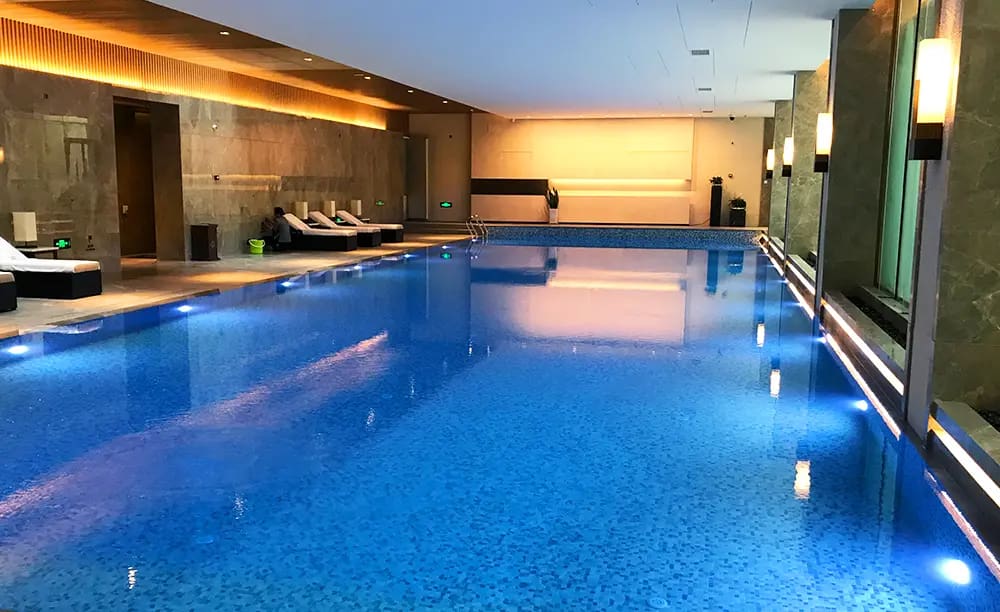
When planning or constructing a pool, the installation depth of pool lights is a detail that cannot be overlooked. Pool lights are not a simple “plug-and-play” component; their installation depth directly impacts safety, lighting effectiveness, lifespan, and maintenance costs.
As underwater electrical equipment, pool lights must be installed in strict compliance with electrical safety standards. The primary principle is ensuring user safety and preventing electric shock incidents.
Select fixtures with a high waterproof rating (e.g., IP68) to prevent water ingress and short circuits during prolonged underwater use.
Fixtures should use transformers to step down voltage to safe levels (typically 12V or 24V), minimizing electric shock risks.
Electrical installation codes in various countries specify precise depth and voltage requirements for pool lights. For example, the U.S. National Electrical Code (NEC) generally recommends installation between 9 and 18 inches underwater. Specific placement depends on fixture design and pool structure, but avoid installing lights in excessively shallow locations.
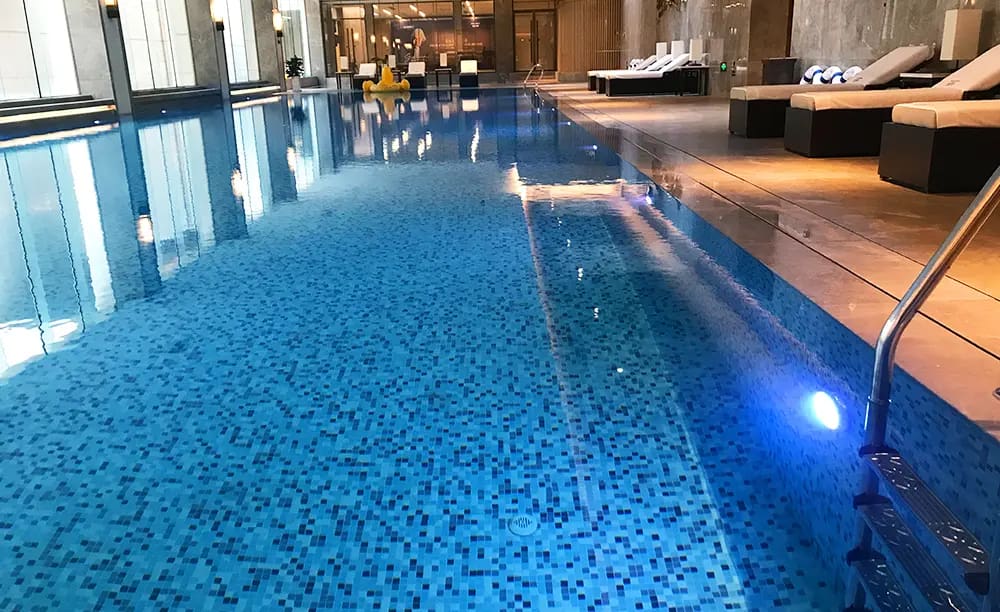
Beyond safety standards, the installation depth of pool lights must also align with actual lighting needs. Different lighting purposes—such as basic illumination, ambient lighting, and underwater landscape lighting—require distinctly different installation depths. Only by matching the installation depth to functional requirements can pool lights deliver maximum effectiveness.
Basic lighting serves as the core function of pool lights, primarily ensuring users can clearly see the pool floor, walls, and underwater obstacles during nighttime swimming to prevent collisions or drowning risks. For such pool lights, the installation depth should follow the principle of maximizing the illuminated area.
Many residential pools or resort hotel pools utilize pool lights as key elements for creating ambiance. By adjusting light colors and angles, they produce warm, romantic, or dreamlike effects. For such ambient lighting, installation depth can be more flexible, optimized based on achieving the best lighting and shadow effects.
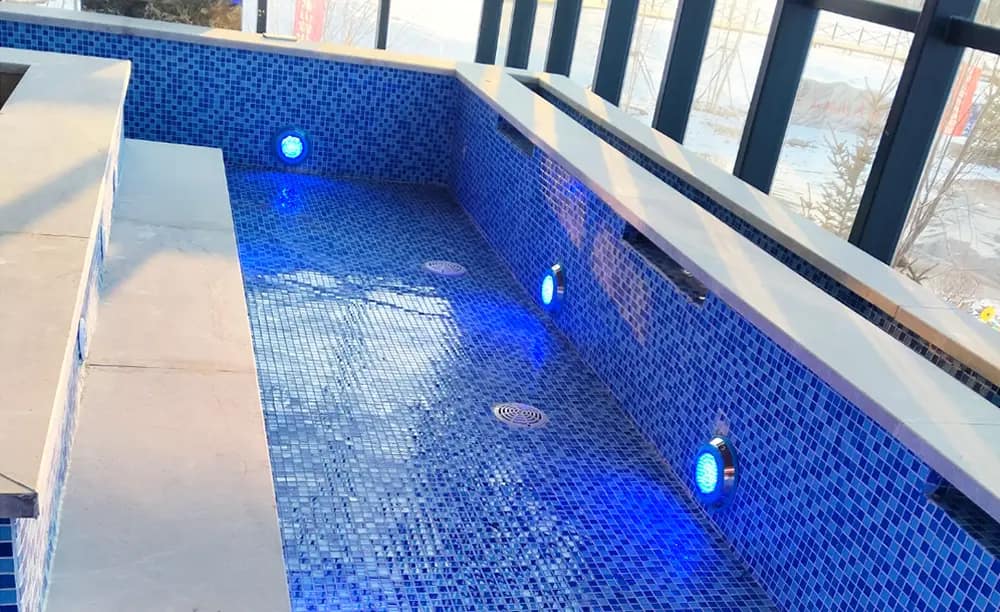
Pool lights are not a one-time installation that lasts forever; they also require replacement (even though LED lights have a long lifespan, they eventually reach the end of their life) and maintenance. The installation depth directly impacts the time and money you’ll spend on this.
Lights generate heat during operation. Water serves as the primary medium for heat dissipation. When installed at an appropriate depth, the pool light is sufficiently surrounded by water, allowing heat to be steadily dissipated. This ensures the light operates within its design temperature range, extending its service life.
If installed too shallowly, the light is too close to the water surface, where temperatures can be higher. This may result in poor heat dissipation. Especially after prolonged exposure to intense summer sunlight, the light remains in a high-temperature state for extended periods. This accelerates the aging of internal components (particularly the LED driver power supply), leading to premature failure.
An easily maintainable installation depth follows the “arm’s reach” principle: the pool light should be accessible without draining the pool, allowing you to reach it directly from the pool edge for convenient operation. If installed too deep, maintenance requires nearly emptying the pool or wearing diving gear to submerge and access the lights. This significantly increases difficulty, time, and cost—especially challenging during winter or when water temperatures are low.
In summary, installing pool lights at a depth of 9 to 18 inches below the water surface represents a reasonable and widely applicable standard. The optimal installation depth for pool lights is not a fixed number; it is the best solution derived from four key considerations: safety regulations, lighting efficiency, equipment lifespan, and maintenance convenience.
Finally, remember that pool light installation constitutes professional electrical work. It is recommended to strictly follow regulations or hire a qualified contractor. Conduct regular maintenance and inspections during use to ensure a safe, bright, and durable pool lighting system in the most hassle-free and cost-effective manner.

 EN
EN  ES
ES  FR
FR  ID
ID